Why Leverage Is Dynamic in Property Sales
Negotiation leverage in residential property selling does not stay constant. It erodes through a sequence of signals that buyers interpret as confidence, urgency, and competition. Across local campaigns, leverage is shaped early and tested continuously.
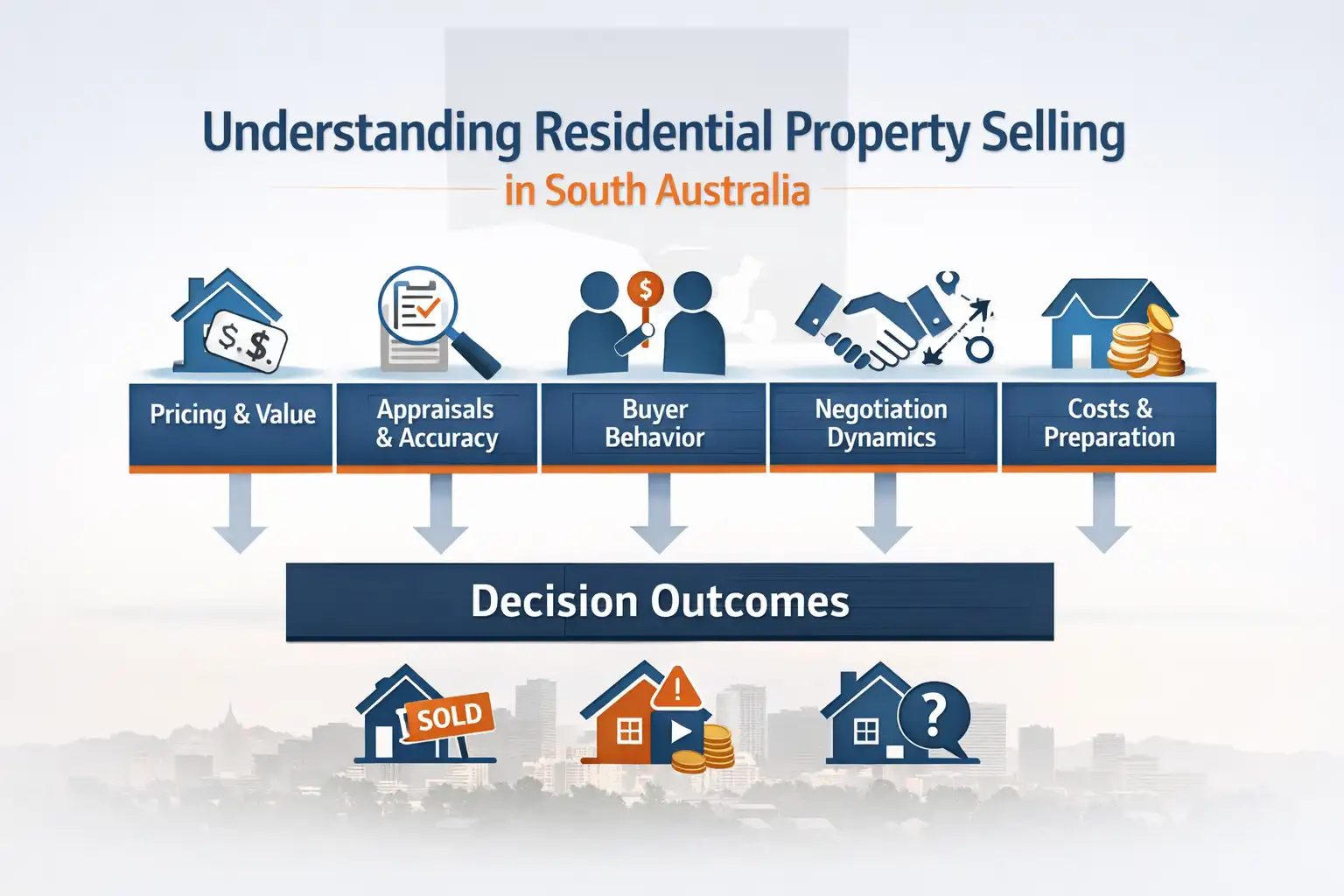
This framework focuses on how leverage is created, maintained, and lost during a selling campaign. Instead of treating negotiation as a final step, it explains why leverage is a product of earlier decisions around pricing, buyer handling, and expectation management.
 alt="South online resource details Australia property selling"
style="max-width:85%;margin:25px auto 30px;display:block;" />
Defining leverage in property transactions
Negotiation power reflects the ability to resist pressure. As advantage builds, buyers adjust behaviour, often acting sooner.
When leverage weakens, sellers are forced to justify position. This shift is rarely sudden; it develops as signals compound.
Why leverage peaks before resistance forms
Advantage is strongest early in a campaign. Ahead of resistance, buyers have less certainty and more urgency.
As time passes, buyers gain information. That clarity reduces leverage unless competition remains visible.
Actions that weaken seller leverage
Campaign choices directly affect leverage. Consistent handling supports confidence.
Mixed signals weaken position. Every delay signals flexibility, which buyers interpret as reduced urgency.
The relationship between leverage and buyer behaviour
Buyer behaviour feeds back into leverage. Visible competition increases urgency.
When buyers believe others are active, leverage rises. Without that belief, power shifts toward buyers.
Why leverage erodes quietly before outcomes change
Advantage declines before price moves. Softer language are early indicators.
Tracking small shifts allows sellers to respond sooner. Within SA, leverage management is a continuous process, not a final negotiation step.